
Winter Minimum Temperatures
Planning resilient heat delivery when Atlanta turns cold.
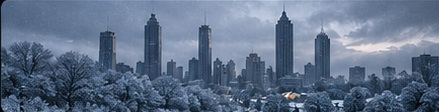
Research Question
What are the typical winter minimum temperatures in Atlanta?
Technical Summary
Seasonal low-temperature climatology is central to frost protection, standby heating and water-circuit resilience. NOAA’s 1991–2020 normals show recurring subfreezing minimum-temperature events despite Atlanta’s comparatively moderate winter climate.
Atlanta winters are often mild, but freezing nights are common enough that water pipes, reservoirs, sensors, and batteries need protection.
Research Findings
Winter minimum-temperature profile
Normal daily minima are 38.4°F in December, 35.6°F in January and 38.9°F in February. Actual individual nights may be colder.
In plain English: The average winter night is cool, while individual freezing nights still need special protection.
Freeze-night recurrence
The 1991–2020 climate normals indicate approximately 35.8 days per year with minimum temperature at or below 32°F. January contributes around 12.8 such days, December 9.1, and February 7.7.
In plain English: Freezing is a regular design hazard rather than an isolated surprise.
Cold-condition subsystem sensitivity
Water-bearing cooling equipment, pumps, valves, batteries and exposed electrical connectors can all experience degraded performance or physical damage in cold conditions.
In plain English: Cooling components need safe winter storage or drainage; heating and power systems need temperature-aware management.
Explore the Numbers
Switch the chart view to compare different dimensions of the research. Each point shows its numerical value; a text table is available below.
Engineering Significance
These observations establish environmental constraints for the solar-powered Atmos Oasis adaptive public climate station. Design choices remain hypotheses until subsystem capacity, safety and field performance are validated.
- Plan protected enclosures, drainage and freeze-resistant water paths.
- Analyze winter heating demand independently from summer cooling demand.
- Define low-temperature sensor triggers and a safe winter operating mode.
Design Implications & Next Step
Measure or estimate extreme minima, freeze duration, wind exposure and battery low-temperature behavior.
Winter normals verified; freeze-protection architecture still under development.
Test Your Understanding
If January’s typical low is above freezing, why protect a water line?
Reveal the explanation
Because daily and monthly averages can be above 32°F even when many individual nights fall below 32°F.
Sources & Research Notes
Weather figures refer to the Atlanta Hartsfield International Airport station, not every neighborhood in metro Atlanta. Sources and data limitations are recorded to support reproducibility.